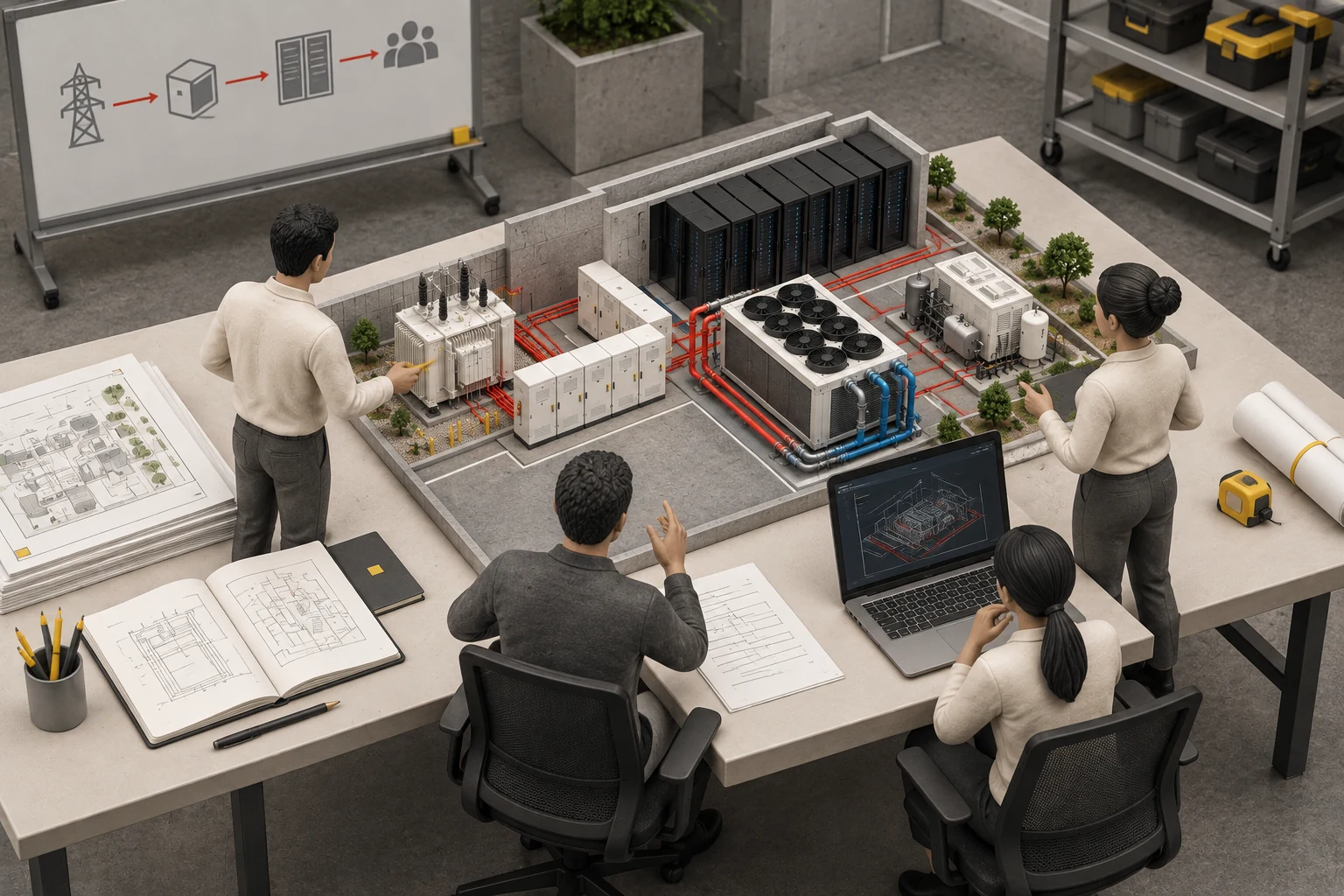
PERSONAL. PRACTICAL.
ROOTED IN COMMUNITY.
Kevin brings technology program leadership, critical-environment experience, incident management, governance and community engagement into a plain-English conversation. The aim is understanding—not hype, a vendor pitch or a predetermined position on a local project.
For someone new to AI, that begins with what the systems do. For a public leader, it begins with who has the evidence, who bears the tradeoffs and who is accountable for the next decision.
Meet KevinBRING THESE INTO THE ROOM.
Use these prompts with utilities, qualified engineers, permitting officials, employers and community representatives. The answers are local; this page does not decide a project’s impact.
What load, and whose grid?
What is proposed versus contracted demand? Which utility studies are complete, who pays for upgrades, and how will reliability and rate impacts be assessed?
A forecast is not an approved interconnection. Peak demand and annual energy are different. Local utility conditions and timing matter.
Which water, in which season?
What are withdrawal and consumption separately? Which water source, watershed and drought scenarios are included? What design tradeoffs depend on local climate?
A closed coolant loop does not establish zero site water consumption. Ask about the full heat-rejection path and the boundary of the claim.
What does an efficiency claim leave out?
Which sites, period and denominator support the metric? Is this a company disclosure, standards guidance, research or independent assessment?
Facility overhead is not useful AI output. Annual or global averages do not independently verify a local project’s impact.
What is a credible career pathway?
Which roles, entry requirements, paid training opportunities and employer-authorized qualifications exist locally? Who will report progress and on what evidence?
Public learning can build vocabulary and a portfolio; it does not authorize hazardous or life-safety work. Do not assume a promised job count is a hiring commitment.
Who owns accountability?
Who answers community questions, verifies disclosures and tracks commitments? Which decisions belong to local permitting, state agencies, utilities or national policy?
Keep confirmed facts, proposed commitments and open questions separate. A general explainer cannot decide a specific permit or replace qualified review.
A SHARED VOCABULARY.
- Power vs energy
- Power is the rate of electricity use (for example, megawatts). Energy accumulates over time (for example, megawatt-hours). A capacity figure is not an annual consumption figure.
- Grid interconnection
- The process and physical connection for linking a facility or energy resource to the electric system. Feasibility, upgrades, approvals and timing depend on the utility and location.
- PUE · Power usage effectiveness
- Total facility energy divided by information-technology equipment energy within a defined boundary and period. It measures overhead, not computing usefulness or lifecycle emissions.
- WUE · Water usage effectiveness
- A water-use ratio relative to IT energy, with units and a stated accounting boundary. Check the reporting method; it does not describe watershed stress on its own.
- Withdrawal vs consumption
- Withdrawal takes water from a source; consumption is water not returned to that source in the accounting period. A report must say which it measures and where.
- Closed loop
- A recirculating fluid circuit. It describes one part of a cooling system, not necessarily how the facility rejects heat or whether the whole site consumes water.
- UPS · Uninterruptible power supply
- Equipment that supports continuity of electrical supply through certain disturbances. Stored energy, topology and duration vary; this is vocabulary, not equipment instructions.
- AHJ · Authority having jurisdiction
- The authority responsible for relevant approvals or enforcement. Applicable codes, editions and permits require qualified local review.
LET’S SHAPE THE CONVERSATION.
A neighborhood group, school, workforce organization, small-business community or public-sector convening can start with a specific question and audience. Possible conversations include AI literacy, infrastructure tradeoffs, career awareness and responsible everyday AI use. Scope, availability and any fees are agreed directly—not promised by this page.
The email action opens your email app with a draft. This site does not send or store inquiries. Personal views only; no employer endorsement or existing partnership is implied.
Creative, brand or digital business work → Moore Creative SuiteSources and further reading
Powering AI and Data Center Infrastructure Recommendations
Reviewed public source
Load Flexibility and Grid Integration
Reviewed public source
Cooling Water Efficiency Opportunities for Federal Data Centers
Reviewed public source
Best Practices Guide for Energy-Efficient Data Center Design
Reviewed public source
Measuring energy and water efficiency
Reviewed public source
Introduction to datacenters
Reviewed public source
Energy efficiency in data centers: DC Pro and DCEP
Reviewed public source
Data Center Power Equipment Thermal Guidelines and Best Practices
Reviewed public source
NFPA 75: Fire Protection of Information Technology Equipment
Publisher scope and edition reviewed; full standard requires NFPA access. Confirm locally adopted edition and amendments.
The systems matter.
So does the conversation.
Grounded conversations about AI infrastructure, critical operations and leadership.