A career pathway needs more than a job-count headline.
Connect public learning to real entry requirements, supervised practice and accountable opportunities—not promises of guaranteed jobs.
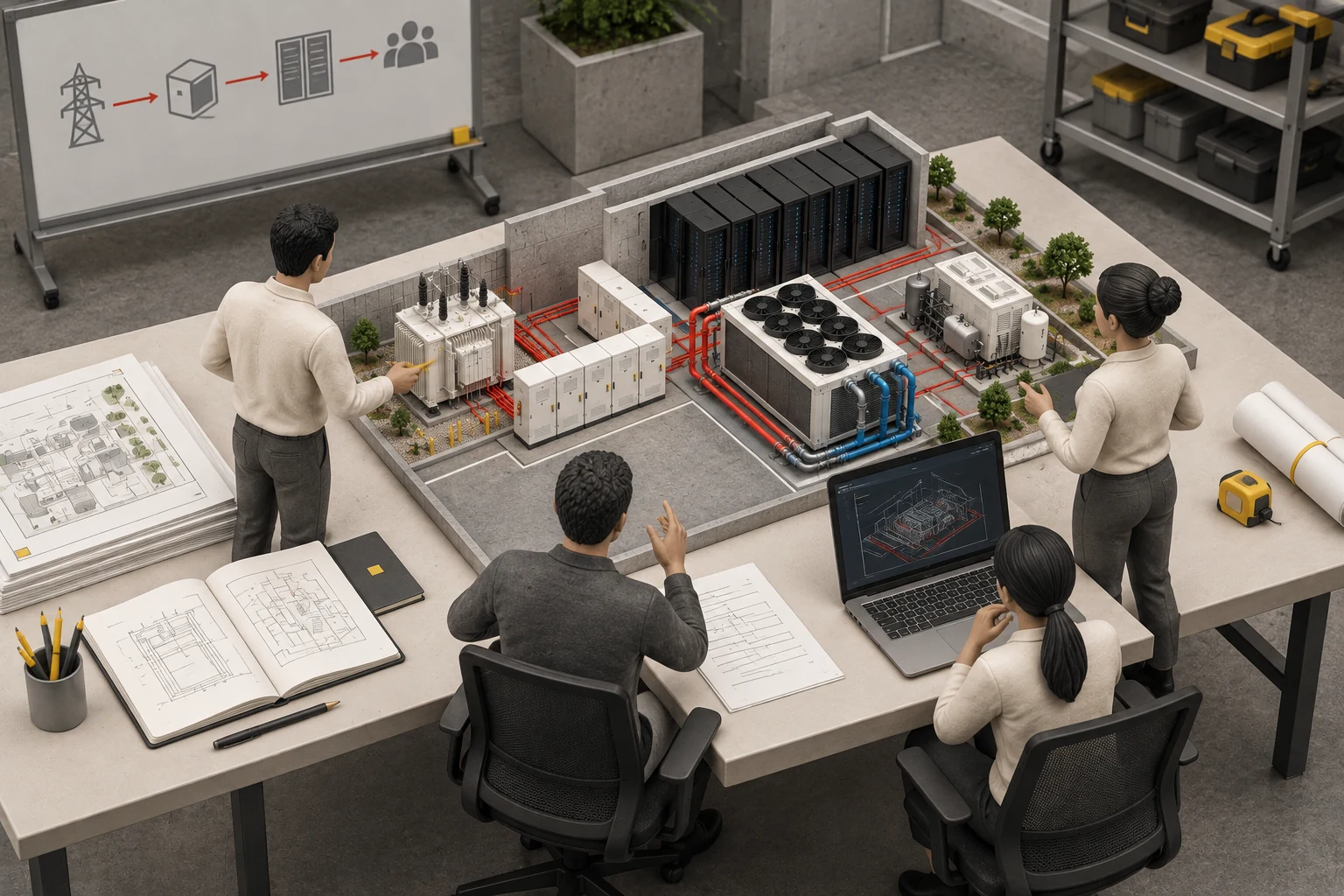
Public-source educational synthesis, selected with Kevin’s authorization. Source guidance and company disclosures are distinguished below; this is not a firsthand facility account or employer statement. Scripts and captions are approved editorial material, not recordings or posted content.
Start with the work people need to understand.
Data-center learning begins with a connected system: electrical supply, heat removal, information technology and the people responsible for dependable operations. Microsoft Learn’s introductory path offers foundational vocabulary. DOE’s Federal Energy Management Program (FEMP) offers data-center energy-efficiency learning. These are learning resources, not evidence that a particular employer is hiring or that a learner is qualified to work on equipment.
A student, career changer or community leader can begin by describing what each part of the system does and how it connects to the next. That is a more useful first milestone than collecting unfamiliar acronyms. A generic dependency map, a source comparison and a clear explanation can demonstrate learning without exposing a real facility’s configuration.
Separate public learning from authorization.
Completing an online module does not authorize electrical, cooling, fire-protection or other hazardous work. Site duties depend on the role, employer requirements, approved training and qualified supervision. Public operations guidance can explain why maintenance and accountability matter; it is not a substitute for the procedures governing real work.
For a candidate, the next step is to compare an actual public role description with the skills it requires. Identify which requirements are already met, which need supervised practice, and which require a recognized qualification. Verify these with the employer or training provider. Do not infer a hiring commitment from a general development announcement.
Ask what makes the opportunity accessible.
A credible community discussion asks who the pathway is for, what entry requirements apply, who provides training, what it costs, and whether paid or supervised opportunities actually exist. Ask who will report participation and completion, and distinguish proposed commitments from verified opportunities. The public learning sources establish places to begin studying—not local placement rates, wages or promised jobs.
For a first learning portfolio, use only public or synthetic information. Explain a system in plain language, attach the sources and their limits, and list the questions that need an authorized reviewer. The purpose is to show careful reasoning and communication, not to present an unqualified facility design or an invented work history.
Sources and further reading
Introduction to datacenters
Reviewed public source
Energy efficiency in data centers: DC Pro and DCEP
Reviewed public source
Describe best practices for datacenter operations
Reviewed public source
Operations and Maintenance
Reviewed public source
The systems matter.
So does the conversation.
Grounded conversations about AI infrastructure, critical operations and leadership.